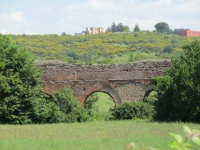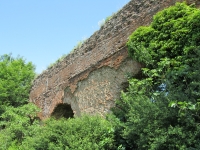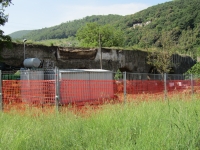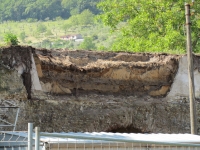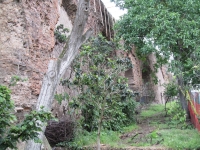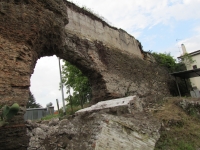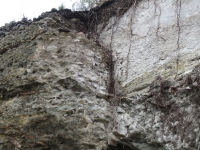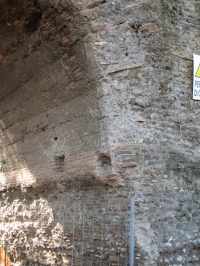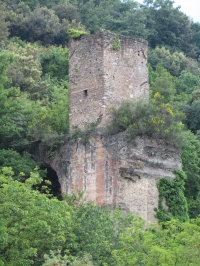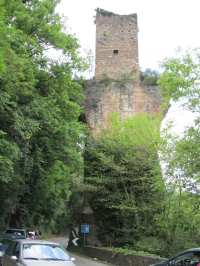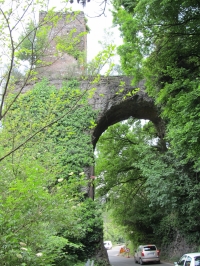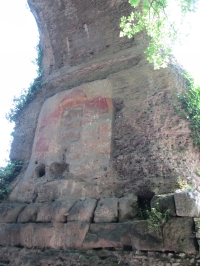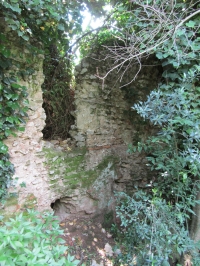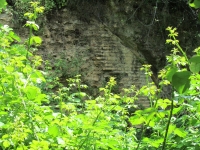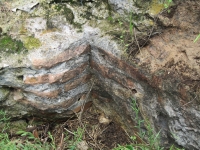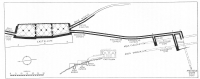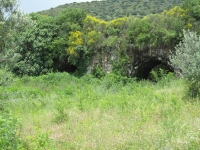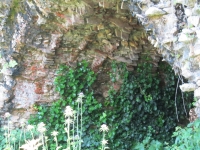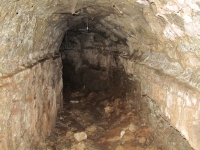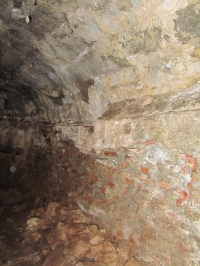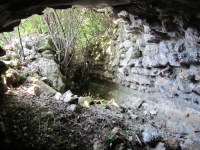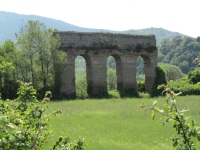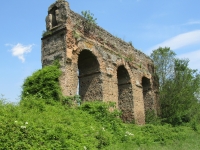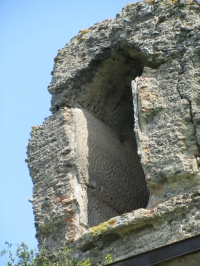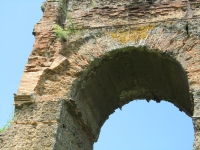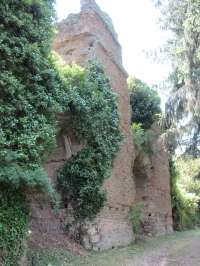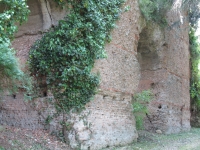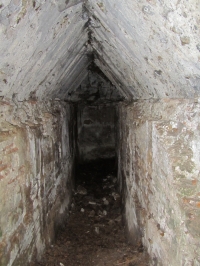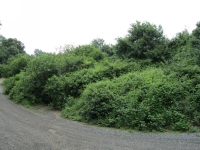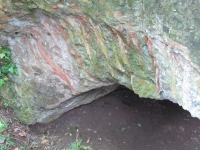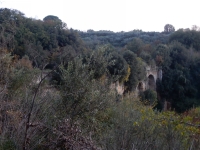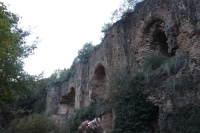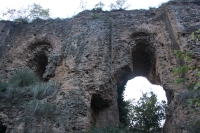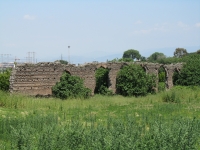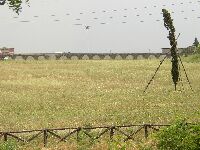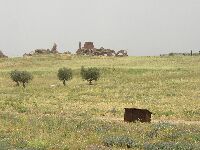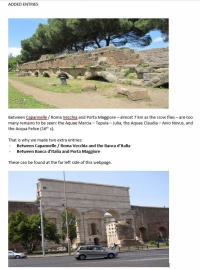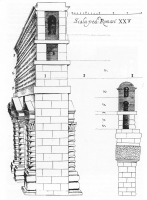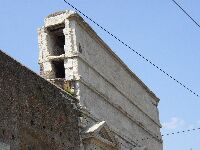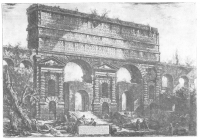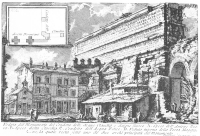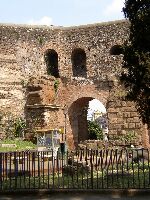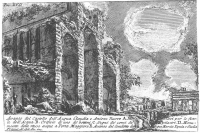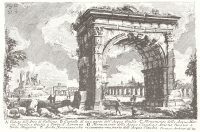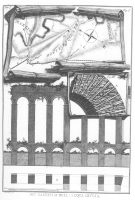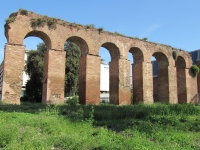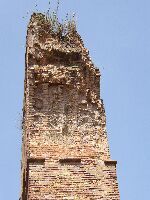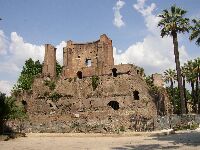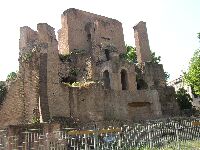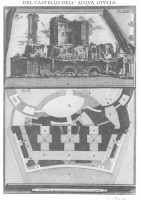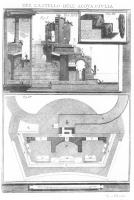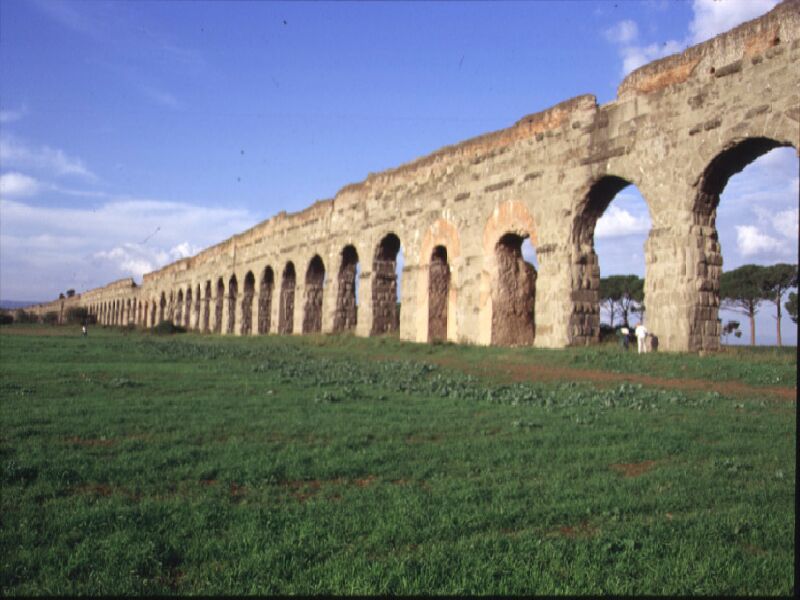
at Roma Vecchia
| For the photo's, see below |
| Home / the complete website |
'The Anio Novus has its intake at the forty-second milestone on the Via Sublacensis in Simbruibe territory, from the Anio River, which flows muddy and turbid even without the bad effect of rain, since it has cultivated and such lands around it, and as a result, quite loose banks. For this reason a settling tank was installed away from the intake of the conduit, where the water might settle and be filtered between the river and aqueduct channel. But even so, it comes to the city turbid whenever there are heavy rains'.Trajan responded to the shortcomings of the source mentioned by Frontinus by moving it upstream to the lake formed when Nero dammed the Anio for his villa )1. According to Frontinus (1.15), it is supplemented by 'the Herculanean Brook, which has its source... opposite the springs of Claudia'.
|
| Aquae Claudia and Anio Novus at Roma Vecchia |
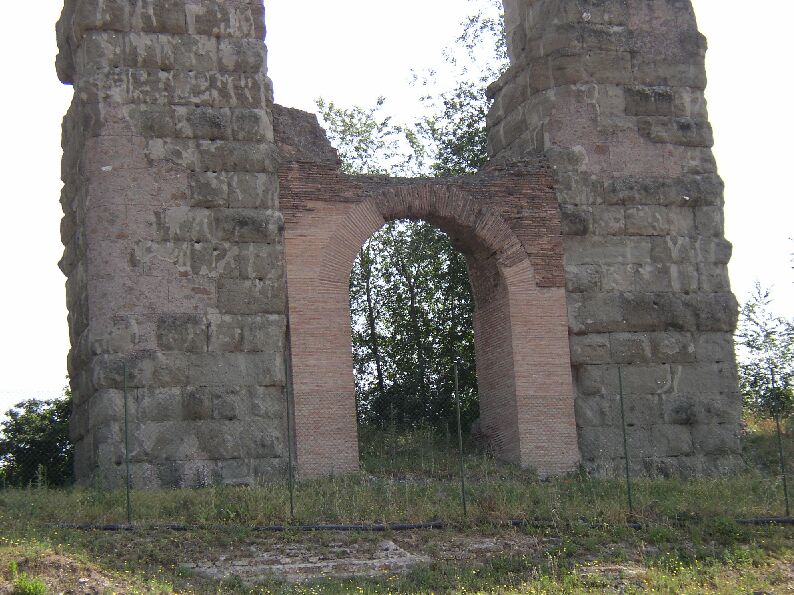 |
| Repairs on the Aquae Claudia and Anio Novus |
| HOME | More literature on more aqueducts | Last modified: January, 2010 - Wilke D. Schram (w.d.schram@romanaqueducts.info) |