Side (Turkey)

Side
For the photo's, see below

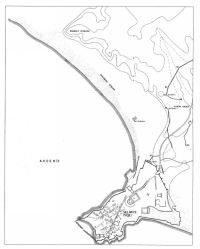
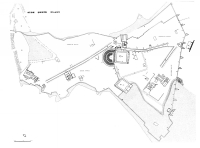
The city of Side (pronounce see - duh) is built on a peninsula and was founded by settles from Cyme in the 7th or 6th Century BC. The inhabitants soon took over the local Pamphilian language and Side is a word in that language, meaning "pomegranate". Greek became more common again after the city went over to Alexander the Great. It was part of the Ptolomaean and Seleucid empires but became heavily involved in piracy before this was eradicated by Pompeius. Side was then brought under direct rule from Rome, and incorporated in the province of Lycia et Pamphylia. It had its time of greatest prosperity under the Empire in the 1-3th Centuries AD.

The aqueduct

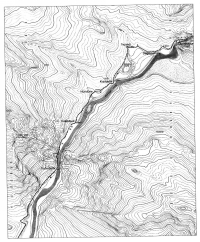
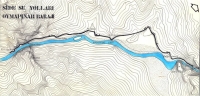
[satellite photo and map of Side are presented below]
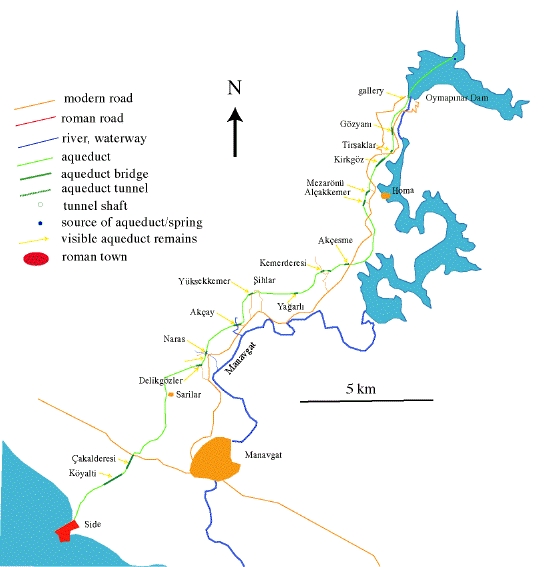
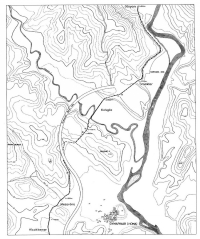
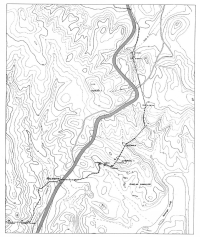
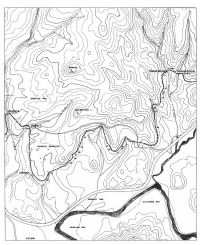
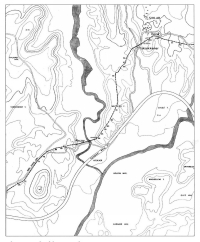
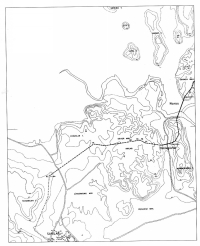
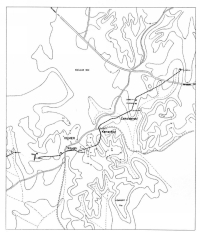
The city of Side had a Roman aqueduct built that brought water to the city from the Dumanli spring in one of the first upstream gorges of the Manavgat river (Melas in antiquity). The aqueduct was built in the second half of the second century, and restored in the first half of the third century, financed by Lollianos Bryonianos and his wife Quirinia Patra from Side. The aqueduct is special for two reasons. It was built in mountainous terrain, but is remarkably straight, with a total length of 30 km although the spring is 25 km in a straight line from Side. In this 30 km, there are 22 aqueduct bridges and 16 tunnels of 100-2260m long, in total 13 km of tunnels! The reason is that the difference in altitude between source and city is only 36 meters. The engineers were therefore forced to look for expensive construction work, tunnels and bridges, to make the connection between source and city as straight and short as possible. Unique is also, that most of the aqueduct bridges have been (partly) preserved and can be visited. As usual, the conduit is built in opus caementitium and buried in an excavation where it is not in tunnels or on bridges, either covered with a vault built on formwork, or by slightly outwards sloping stone slabs, especially in the upstream section. Several different rock types were used in construction of the aqueduct bridges, and these reflect the local geology, minimising transportation costs. Since some rocks are more prone to weathering than others, this also caused a different state of preservation of the bridges. Unfortunately, the most interesting first three kilometres of the aqueduct are now covered by the waters of the Oymapinar reservoir.


Map of the Side aqueduct, the aqueduct in green

Spring and River Crossing

The aqueduct starts at the Dumanli spring, the largest karstic spring in the world, which contributes one third of the water of the Manavgat river from a single orifice in the mountain. The spring emerged on the east side of the river at 62 metres elevation, 5 metres above the Manavgat river 10m from the river bank (Karanak&Güney1980). Dumanli means "misty", referring to the permanent haze around the spring caused by the tremendous force of 50m3 of water per second cascading down the mountain.
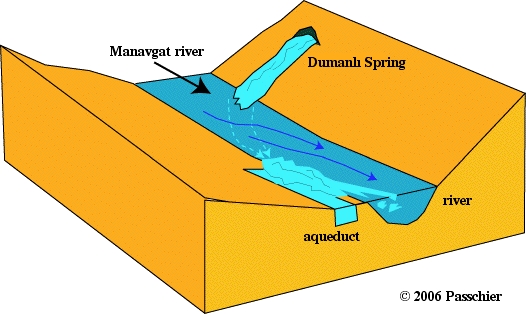
A problem for the Roman engineers was that the spring lies on the east side of the river, while the aqueduct was to be constructed on the west side. Instead of building a bridge across the deep and fast flowing river at this point, subject to floods and the force of the spring, the roman engineers found a more practical solution. The spring water, however, entered the Manavgat river with such force and in such a large volume that it created an eddy which brought the water upwelling on the western shore, where it was captured in the first section of the aqueduct conduit; although this spring water was contaminated with some upstream Manavgat water, which would have been sediment laden part of the year, it was mostly clear water from the spring, and this was apparently of sufficient quality for the city of Side.


Method of capturing the Dumanli spring for the aqueduct of Side

The first section of the aqueduct capturing the spring by the method described above was at at 49.79 m with a conduit measuring 203 x 209 cm in diameter (Izmirligir1979). From the spring, the aqueduct passed the steep rock walls of the upper Manavgat gorge through three galleries and over two aqueduct bridges to the edge of the plain, where it passed a further series of 20 aqueduct bridges and 13 km of tunnels. The tunnels were mostly built in conglomerate (for 11700m), and some in sandstone. All tunnels were built in qanat mode, where parties dug in two directions from regularly spaced vertical building shafts until they met. The building shafts are 4 to 61 metres deep. Many of the tunnels have no built internal conduit facing.
Before the aqueduct reached the city, it entered a distribution tank where part of the water was diverted to the huge Nymphaeum in front of the main city gate. Another branch penetrated the city wall through an opening 42x46 cm at 14.16m that is still well preserved. The conduit gradually decreased in size downstream, probably because part of the water was used for irrigation. According to Izmirligir1979, at least some of the water was diverted just before the village of Sihlar for this purpose.

Visible Remains

[Where the text is presented in bold a photo or drawing is presented below]
The first three kilometres of the aqueduct are covered by the Oymapinar reservoir, including the famous Dumanli spring, the largest karstic spring in the world, two rock cut galleries, two aqueduct bridges amongst which the Hündüve bridge, built from rubble concrete.

Below, we list the remaining visible parts of the aqueduct, from the Oymapinar Dam to the baths of Side. Most of these parts can be visited by walking in from the main road, but permission must be obtained to visit the Firfirdelik gallery and the dam site.
  1. Firfirdelik gallery (48m above sea level). This impressive gallery lies just below the dam and can be seen from above from the dam. It is cut into a vertical rock wall in the manner shown in the sketch, leaving a 3 m high wall separating the aqueduct from the gorge. The cut is up to 10 deep, and the conduit of the aqueduct 1.8m wide. Locally, arches were left standing to support weak sections of the rock wall.
  2. Gözyani bridge - This bridge can be seen along a parking lot west of the main road just before the dam site. It is in one tier, 98m long, with 10 arches. The pillars are faced with nicely rusticated opus quadratum with prominent imposts.
  3. Tirsaklar bridge. The bridge is 47m long, one tier, with three arches of which two are standing. The bridge is built of rather weathered sandstone ashlar.
  4. Kirkgöz bridge. The name means "forty openings". The bridge is 335m long, one tier, 44 arches up to 12,5m high, in limestone ashlar.
  5. Mezarönü bridge. This low bridge on the Sari creek is rather overgrown. It is built in sandstone ashlar, and its length given as 360m (Izmirligir) or 234m (Grewe).
  6. Alçakkemer bridge. This is a low bridge (Alçakkemer means "low arch") close to the previous one with length given as 180m (Izmirligir) or 130m long (Grewe)
  7. Akçesme bridge ("white fountain"). Only two pillars remain of this bridge.
  8. Kemerderesi I bridge - "creek of arches" . This was a bridge of two tiers over a deep gorge.
  9. Kemerderesi II bridge. This is a long bridge crossing shallow valley, close to the previous one
  10. Yagarli bridge. A small bridge of one arch over a creek
  11. Yüksekkemer bridge - "The tall arches". This is an elegant bridge of one tier with tall pillars supporting originally 11 arches or which 4 are preserved along the village road to Sihlar. Pillars are build from conglomerate ashlar which is strongly eroded. The bridge shows evidence of many repairs. Its length is given as 213m (Izmirligir) or 140m (Grewe). 36.8444N; 31.460856E
  12. Akçay tunnel. The entrance of this tunnel is visible from the Yüksekkemer bridge, but it can be entered east of the Akçay bridge. The tunnel can be followed for 300m. Visible are three vertical building shafts, course corrections where tunnel segments met and sections where the roof had to be strengthened with concrete, and where remains of formwork are clearly visible.
  13. Akçay bridge. This bridge of 350m long was partly in two tiers. A section of three piers is still standing with arches of both tiers preserved. The bridge is built in conglomerate ashlar. 36.8342N; 31.46085E
  14. Naras tunnel. A tunnel north of the Naras bridge can be visited, with 9 vertical building shafts
  15. Naras bridge. This bridge over a small creek of 340m long originally had 24 arches. It was rebuilt as a road bridge in Selçuk time using one 7m high roman pillar and two pillar foundations. It can still be used as a pedestrian bridge. Other remains of pillars are visible, as well as remains of the specus on the north side of the bridge. 36.8252N; 31.4667E
  16. Delikgözler bridge ("the openings") The ruined pillars of this bridge of 17 arches can be seen along a country road near Sarilar. It was built in conglomerate ashlar, with a 1.2m wide specus. 36.8220N; 31.4458E
  17. Çakalderesi bridge. This bridge of 198m can be seen near Manavgat. It shows several signs of repairs.
  18. Koyalti bridge, near Kemerköy. This bridge is built from conglomerate blocks and, runs up to the hellenistic walls of the city.
  19. City wall. Between the second and third towers from the sea, pillars of the aqueduct approach the town wall, and a 46x42cm wide opening can be seen near Motel Anadolu where the aqueduct entered the city.
  20. Nymphaeum, originally with a three-tiered facade behind basin. The lowest tier is preserved, with three niches and several flat water spouts. The nymphaeum was built at the same time as the aqueduct. Several flat water spouts are visible in the back wall. A large water basin was present in the foreground.
  21. Section of channel inside the walls. Part of the aqueduct as a conduit from single blocks, is visible behind the baths.
  22. Besides these aqueduct remains, several interesting sets of ceramic pipes, dividing blocks and fountains are visible in the museum and throughout the city of Side.

C.W. Passchier (photo's taken during a visit in 2001)

Selimiye - SIDE

Item Info
Length 30 km
Cross-section 1,2 m x 1,5 m
Volume 35.000 - 43.000 m3/day
Fall 0,12 %
Period Antonine
Features
  • intelligent river crossing
  • many bridges
  • many tunnels


Recommended literature :
  • Grewe, Klaus. 1994. Die römische Wasserleitung nach Side (Türkei). Antike Welt 25, volume 2, 192-203
  • Izmirligir, Ülkü. 1979 Die Römische Wasserversorgung von Side. Mitteilungen des Leichtweiss Institut für Wasserbau, Braunschweig. 64.
  • Özis, Ünal . 1996. Historical water schemes in Turkey. Water resources development 12, 347-383.
  • Akurgal, Ekrem. 1993. Ancient civilizations and ruins of Turkey.
Recommended website : none
How to visit : see text above
HOME More literature on more aqueducts Last modified: February, 2007 - Wilke D. Schram (wilke@romanaquaducts.info)


Apollo temple

Ornament of the Apollo temple

Satellite image

Method of capturing

Map of the aqueduct

NE corner of Side

Schematic section through the Firfirlik gallery

Gözyani bridge

Kirkgöz bridge

Akçay bridge

Çakalderesi bridge

Nymphaeum of Side

Ceramic pipes